

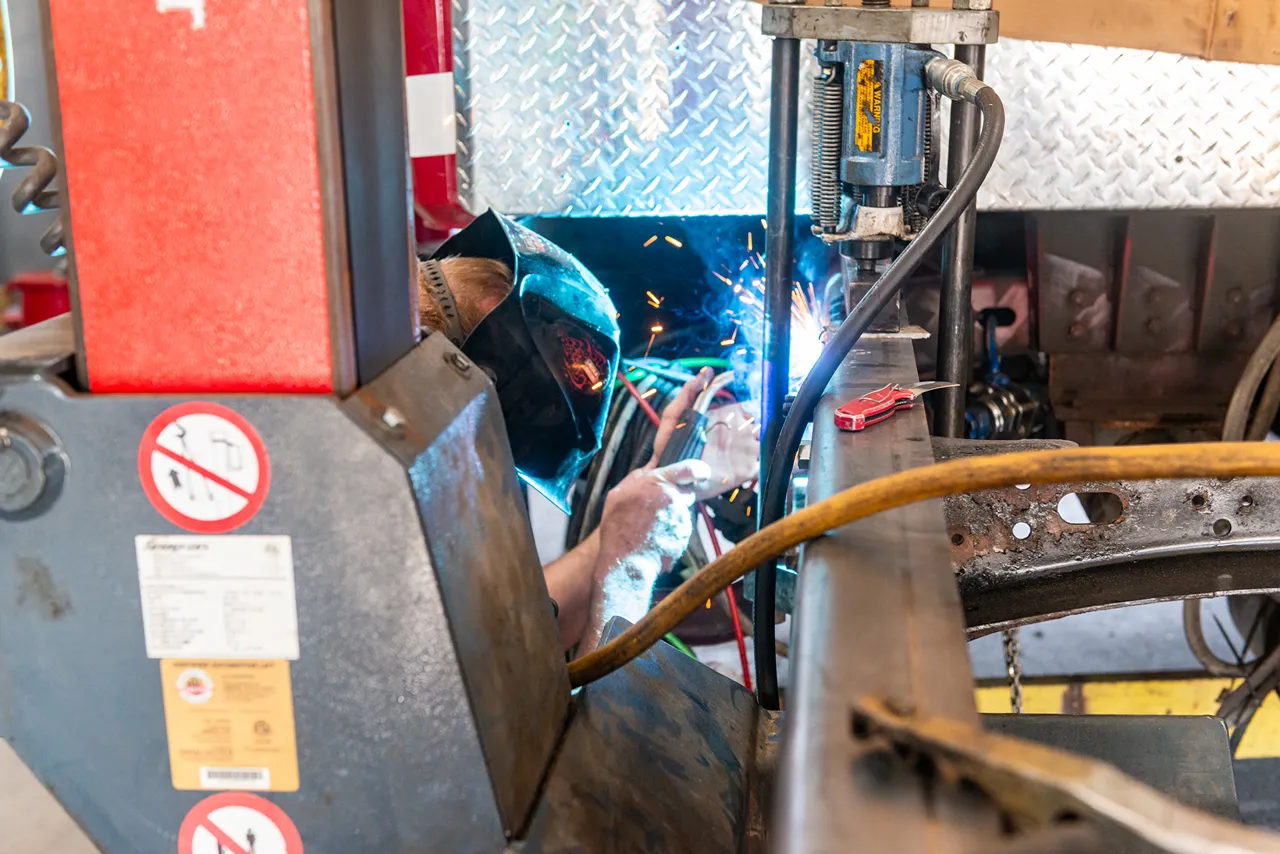
A cracked crossmember or bent suspension bracket may look manageable on a dry October afternoon. Add winter grime, road salt, moisture, and another round of demanding freight cycles, though, and that same defect becomes much harder to inspect and manage.
That’s why October is a practical time for structural truck repair in Joliet. Catching existing fatigue, corrosion, and impact damage now gives you a chance to address it before winter conditions complicate the job.
Why Is October a Smart Time for Truck and Trailer Structural Repair?
Cold temperatures alone don’t suddenly cause sound steel to fail. The bigger issue is that existing fatigue cracks, corrosion, damaged seams, and loose mounting points become more difficult to inspect and repair once salt, moisture, ice, and winter road grime enter the picture.
October also gives fleets a useful opportunity to inspect equipment before another demanding winter operating cycle.
Why Does Joliet’s Intermodal Freight Activity Put Structural Components to Work?
Joliet isn’t an ordinary trucking market. The city has access to major interstate corridors and extensive rail infrastructure, while the greater Joliet area supports one of the country’s most significant concentrations of intermodal and logistics activity.
The Elwood/Joliet intermodal district makes that especially relevant. Its transportation planning area is generally bounded by I-80 to the north, US 52 to the east, Hoff Road to the south, and I-55 to the west.
Equipment moving from a container yard or warehouse to a local truck route and then onto I-55 or I-80 can experience repeated loading, trailer swaps, yard vibration, dock contact, concentrated cargo loads, and high utilization.
None of those conditions automatically means structural trouble. But when a trailer already has a cracked weld, weakened mount, or bent support, repeated service can continue working that damaged area.
What Should You Inspect on Trailer Crossmembers and Floor Supports?
Start underneath the trailer. Trailer crossmembers and floor supports carry and distribute loads, so damage in these areas deserves more than a quick glance.
Check for:
- Cracked or separating welds
- Bent or distorted crossmembers
- Corrosion around mounting points
- Sagging or distorted floor supports
- Previous repairs that are separating
- Damage associated with forklift traffic or concentrated loads
Dry vans and intermodal chassis can accumulate countless loading and unloading cycles. A forklift strike, overloaded section, or previously damaged support may leave evidence that becomes easier to miss once winter debris coats the underside.
Don’t judge a repair by whether somebody can simply run another weld over the crack. The condition of the surrounding metal and the reason the damage occurred matter just as much.
What Do Cracked Suspension Hangers and Mounting Brackets Tell You?
A crack at a suspension bracket can be a symptom rather than the entire problem.
Inspect hanger and mounting areas for cracks near weld toes, elongated bolt holes, bent brackets, rust, loose hardware, and polished or displaced metal indicating repeated movement.
Heavy-duty suspension systems support vehicle and cargo weight while helping absorb road impacts. Uneven loading, movement, component wear, or alignment problems can therefore place abnormal loads on associated mounts and brackets.
If a crack keeps returning after repair, simply welding it again misses the point. A technician should determine whether movement, geometry, corrosion, fatigue, or another condition is causing the area to fail repeatedly.
Which Smaller Structural Parts Are Good Fabrication Candidates?
Not every structural repair involves a major frame member. Trucks and trailers accumulate plenty of localized impact and fatigue damage around components that operators use every day.
Common areas worth checking include:
- Bent steps and cracked step mounts
- Damaged rear bumpers or rear underride structures
- Loose toolbox brackets
- Cracked mudflap and fender mounts
- Damaged dock-bumper mounting areas
- Equipment brackets and accessory mounts
- Service-body and hydraulic-tank supports
When the surrounding material remains structurally sound, some brackets, mounts, and supports may be practical candidates for truck fabrication or localized repair. The repair still needs to account for how the component carries its load instead of merely making the crack disappear.
What Structural Damage Should Flatbeds and Vocational Trucks Get Checked For?
Joliet’s freight economy goes well beyond dry vans. Flatbeds, Class 7–8 tractors, construction trucks, service vehicles, and equipment-support trucks all work throughout the area.
On a flatbed, inspect flatbed deck supports, rub rails, stake pockets, tie-down locations, and welds near repeatedly loaded areas. Bent rub rails, broken stake pockets, or fatigued support welds can reveal where impacts or repeated cargo loads have been working the structure.
Vocational trucks deserve similar attention around body mounts, steps, toolboxes, fender supports, hydraulic tank mounts, and other equipment mounting brackets. These components see vibration and repeated loading every working day, so small cracks shouldn’t become permanent fixtures.
Why Should You Deal With Trailer Corrosion Repair Before Road Salt Arrives?
Corrosion deserves more attention than surface appearance.
Check crossmembers, frame sections, suspension mounting areas, rear structures, deck supports, and step mounts for metal that is thinning, flaking, perforated, or separating around seams. Once corrosion has consumed enough material, the original section may no longer provide a sound base for a durable repair.
That’s why welding directly over severely corroded steel is rarely the right answer. Proper trailer corrosion repair may require removing compromised material before fabricating a replacement section or reinforcement that ties into sound metal.
Winter road salt and moisture make this inspection more important—not because salt instantly creates structural failure, but because an already deteriorating area can continue corroding while accumulated winter grime makes its condition harder to monitor.
When Should Structural Damage Be Repaired Instead of Replaced?
Welding and fabrication repair can make sense when the damage is localized, the surrounding material remains sound, and the component can be repaired according to appropriate procedures.
A repair may be reasonable when a technician can safely recreate a damaged bracket, replace a localized support, repair an approved crossmember area, or fabricate an obsolete mount.
More extensive repair or replacement may make better sense when:
- Corrosion has caused significant metal loss.
- Damage involves a critical frame area.
- The same crack repeatedly returns.
- Mounting geometry or alignment has changed.
- Several connected components are damaged.
- The manufacturer specifies limitations on structural repair.
There’s no universal rule that every crack should be welded. A good structural assessment looks at the component, surrounding material, load path, cause of damage, and applicable repair requirements before deciding what comes next.
Fix Structural Damage Before the Next Joliet Winter Freight Cycle
October gives you something December often doesn’t: a cleaner, more convenient opportunity to see what’s actually happening underneath your equipment.
Inspect fatigue cracks, crossmembers, suspension mounts, flatbed supports, brackets, rear structures, and corrosion before winter conditions cover the evidence. For equipment regularly cycling through Joliet’s intermodal facilities and onto I-55 or I-80, correcting existing structural problems now can help prevent a manageable repair from becoming a much larger interruption later.
At C1 Truck Service, we repair trucks and commercial trailers in Joliet and provide body and collision repair capabilities for truck and trailer equipment. If you’ve spotted cracked, bent, corroded, or damaged structural components, give us a call at 872-777-8710.
FAQs
Can a cracked truck or trailer bracket simply be welded?
Not always. The technician should first determine why the bracket cracked and whether the surrounding metal remains sound. Repeated movement, fatigue, corrosion, alignment issues, or abnormal loading may need to be corrected before a lasting repair can be made.
Is rust on trailer crossmembers always a structural problem?
No. Surface rust and significant metal loss are different conditions. Corrosion becomes more concerning when the metal is heavily scaled, thinning, perforated, separating, or losing material around mounting and load-bearing areas.
Why inspect trailer structural damage before winter?
October allows existing cracks, corrosion, and impact damage to be examined before road salt, moisture, ice, and winter grime make those areas harder to inspect and repair. Nearby climate normals also show that freezing temperatures commonly begin during October.
Should every cracked truck frame be welded?
No. Frame repairs depend on the location and extent of damage, surrounding metal condition, vehicle design, alignment, and manufacturer repair requirements. Some damage may require replacement or specialized structural procedures rather than a straightforward weld.
What trailers should Joliet fleets inspect for structural damage?
Dry vans, intermodal chassis, flatbeds, warehouse and distribution trailers, and other high-utilization commercial trailers should receive regular structural inspections. Crossmembers, suspension mounting areas, floor supports, rear structures, tie-down points, and accessory mounts are useful places to start.
