

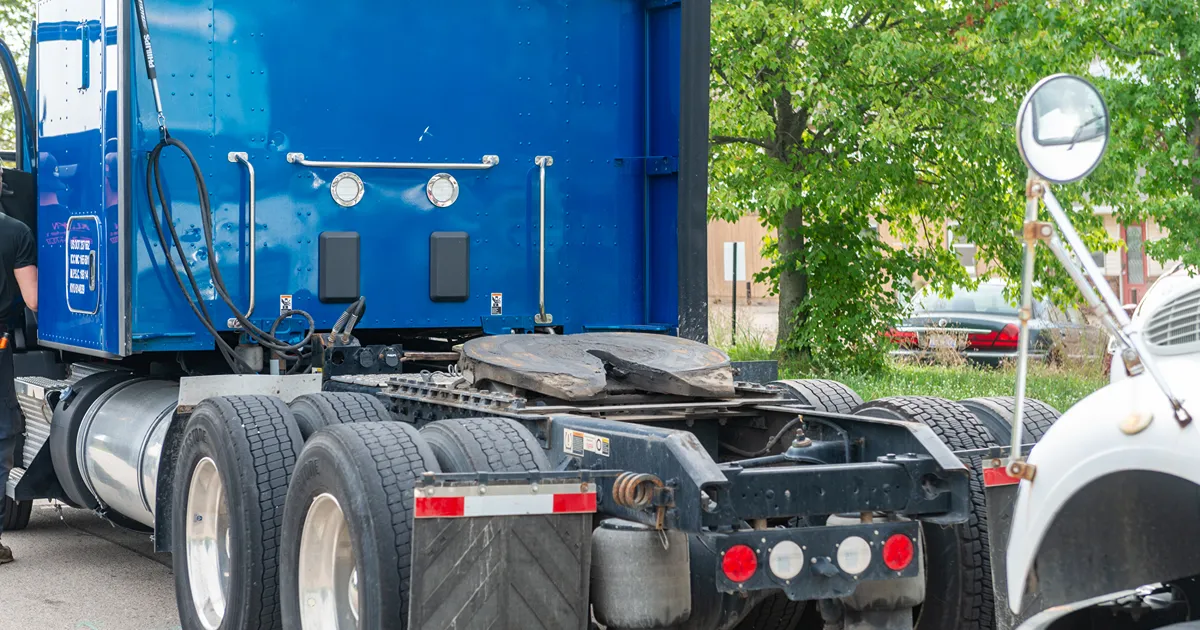
Joliet warehouse and distribution fleets cannot afford to lose tractors to unnecessary shop trips. See how on-site mobile truck repair helps crews address defects at the yard, protect dispatch schedules, and keep equipment ready for I-80 freight runs.
A day cab is scheduled for another run, but a weak battery, air leak, or lighting fault keeps it parked at the yard. Sending that truck across Joliet for repairs can create almost as much disruption as the defect itself.
For warehouse and distribution fleets, the real problem is often getting repairable equipment to a shop. Our team at on-site mobile truck repair brings professional fleet services directly to you, helping you address serviceable defects while trucks and trailers remain where the next load starts.
Why Does Mobile Truck Repair Make Sense for Joliet Warehouse Fleets?
Joliet's freight network keeps trucks moving through a dense mix of warehouses, rail terminals, container yards, and distribution facilities.
The CenterPoint Intermodal Center creates constant movement for Class 8 tractors, day cabs, dry vans, container chassis, spotter trucks, and local distribution vehicles. A tractor may finish one warehouse move only to be needed for another pickup, container transfer, or regional delivery.
When a repair can reasonably be completed in your yard, moving the truck elsewhere adds another step. Fleet mobile repair can eliminate that repositioning and let your operations team focus on the equipment that is still ready to dispatch.
How Does On-Site Repair Help Keep Tractors Available for Scheduled Loads?
Warehouse and drayage operations depend on equipment availability more than mileage alone. A relatively small electrical, air-system, or starting problem can remove an otherwise productive tractor from the dispatch board.
With on-site truck repair, the unit can stay parked while a technician diagnoses and addresses the defect. Your drivers do not need to spend productive time taking repairable equipment to a shop and arranging transportation back to the terminal.
That advantage becomes especially important for day cabs making repeated runs between the CenterPoint complex, nearby warehouses, and intermodal terminals. The faster a serviceable truck returns to the available pool, the easier it becomes to protect planned pickups and dispatches.
Why Can Repairing Several Trucks at One Yard Improve Fleet Efficiency?
One of the biggest advantages of mobile fleet maintenance appears when several units need attention at the same location. Instead of routing three tractors and two trailers to separate shop appointments, you may be able to have multiple defects addressed during one yard visit.
That approach fits warehouse-based fleets particularly well. CenterPoint supports container, trailer, and equipment storage along with intermodal and drayage activity, so fleets can have a mix of tractors, trailers, chassis, and yard equipment concentrated in one operating area.
Mobile service also complements preventive maintenance. Heavy-duty preventive maintenance is designed to identify and correct developing problems before they become larger failures, including issues involving fluids, brakes, tires, and other vehicle systems.
Which Truck Problems Can Often Be Addressed at a Joliet Fleet Yard?
Not every diesel repair belongs in a parking lot. Major engine, transmission, or component-overhaul work may still require a fully equipped repair facility.
However, many common fleet defects lend themselves to mobile diesel repair, depending on the problem, access, parts requirements, and working conditions.
- Starting and charging problems: Weak batteries, damaged cables, poor connections, alternator concerns, starter problems, and no-start conditions can often be diagnosed without first moving the tractor. A truck's battery supplies starting power, while its alternator recharges the battery and supplies electrical power while the engine operates.
- Air and brake-system faults: Technicians can inspect issues involving air leaks, hoses, chambers, valves, and related air brake repair concerns. Heavy-duty air brake systems rely on compressed air moving through air lines and into service chambers to begin the braking process.
- Electrical and lighting faults: Wiring problems, connectors, marker lights, trailer lights, and damaged electrical connections are especially relevant when tractors and trailers cycle through a yard throughout the day.
- Cooling-system problems: Coolant leaks, worn hoses, belts, and related cooling system repair require attention before a minor leak becomes an overheating event. The cooling system circulates coolant through the engine to absorb heat before releasing that heat through the radiator.
- Trailer and chassis defects: Air lines, electrical connections, lighting, and other accessible trailer repair items may be serviceable while the equipment remains staged at your facility.
The goal is not to turn the fleet yard into a repair shop. It is to handle appropriate defects where the equipment already sits and reserve shop transportation for repairs that genuinely require it.
Why Does I-80 Make Unnecessary Shop Trips More Disruptive?
For Joliet fleets, every unnecessary equipment move competes with actual freight movement. CenterPoint sits near the I-55/I-80 interchange, while the Houbolt Road Extension provides a direct connection between I-80 and the intermodal complex.
That connection makes I-80 central to local warehouse and drayage operations. It also makes keeping equipment ready before it enters the corridor especially valuable.
The timing matters, too. As of summer 2026, the multiyear I-80 reconstruction project through Joliet continues to produce lane shifts, overnight closures, and significant delays. IDOT's overall project covers approximately 16 miles and is scheduled for major construction through 2028.
If a technician can complete an appropriate commercial truck repair at your yard, you avoid putting a defective or non-revenue-producing truck into that traffic simply to reach a repair facility.
Can Mobile Repair Help Address Defects Before Dispatch?
Yes. Finding a problem at the yard gives you an opportunity to address it before the truck returns to I-80, Houbolt Road, or another freight route.
Illinois State Police enforces state and federal motor-carrier safety requirements and conducts commercial vehicle inspections using North American Standard procedures. Vehicles with sufficiently serious violations can be placed out of service.
Mobile repair does not guarantee DOT compliance, nor does it replace a fleet's inspection and maintenance responsibilities. It can, however, help you correct known mechanical defects before equipment returns to operation.
Why Is September a Useful Time for Early-Fall Fleet Maintenance?
September sits between demanding summer operation and colder late-fall conditions. That makes it a practical time to catch problems that have already started showing themselves instead of waiting for them to become dispatch-day failures.
For warehouse fleets, early-fall inspections can focus on battery and charging performance, cooling-system leaks left over from summer, belt and hose wear, lighting concerns as daylight decreases, and developing brake or air-system defects.
A scheduled heavy-duty truck service visit can also give you a chance to work through several parked units at once. Catching a marginal cable, leaking hose, or damaged trailer connection in the yard is far less disruptive than discovering it when the equipment is already assigned to a load.
Keep Joliet Fleet Repairs Closer to Where the Work Starts
Joliet warehouse and distribution fleets operate in an environment built around quick equipment turns. When tractors, trailers, and chassis already sit at your facility, taking every repair to a shop can add mileage, driver time, scheduling steps, and another opportunity for a missed dispatch.
On-site mobile truck repair gives you another option. By addressing appropriate starting, electrical, brake, cooling, trailer, and chassis problems at your yard, you can keep more equipment positioned where your next CenterPoint, Houbolt Road, or I-80 run begins.
When your fleet has trucks or trailers waiting on repairs, contact our team at C1 Truck Service at 872-777-8710 to schedule mobile service in the Joliet area and get serviceable equipment back into your rotation.
FAQs
What is on-site mobile truck repair?
On-site mobile truck repair is commercial vehicle service performed at a fleet yard, warehouse, terminal, or similar location instead of requiring the truck to travel to a repair shop. It is commonly suited to diagnostics, maintenance, and repairs that can be safely completed with mobile equipment.
What types of Joliet fleets benefit most from mobile truck repair?
Warehouse, distribution, drayage, intermodal, regional, and local delivery fleets can benefit when multiple trucks or trailers are based at one facility. Day cabs, Class 8 tractors, dry vans, container chassis, yard tractors, and distribution trucks are common examples.
Can a mobile technician repair more than one truck during a visit?
Yes, depending on the repairs required, parts availability, and scheduling. Servicing multiple units at one fleet yard can reduce the need to transport each individual vehicle to a repair facility.
Does mobile truck repair replace a diesel repair shop?
No. Complex engine, transmission, fabrication, or major component repairs may require shop equipment and facilities. Mobile service is most useful when the needed inspection, maintenance, diagnosis, or repair can reasonably and safely be completed at the fleet's location.
Can mobile repair help prepare trucks for dispatch?
Yes. Mobile technicians can address identified mechanical defects while equipment remains at the facility, helping fleets return serviceable trucks and trailers to their available equipment pool before dispatch.
